
December 16, 2025
Can a Generator Power My Whole House or Just a Few Things?
You can find generators everywhere these days—on construction sites, at outdoor events, in hospitals, and beside homes across the Tri-State Area. They keep the lights on, the heat running, and essential electronics working when the grid goes down. But one big question often comes up for homeowners: can a generator power my whole house, or just a handful of appliances? The answer depends on generator power capacity, your home’s electrical demands, and the type of system you choose.
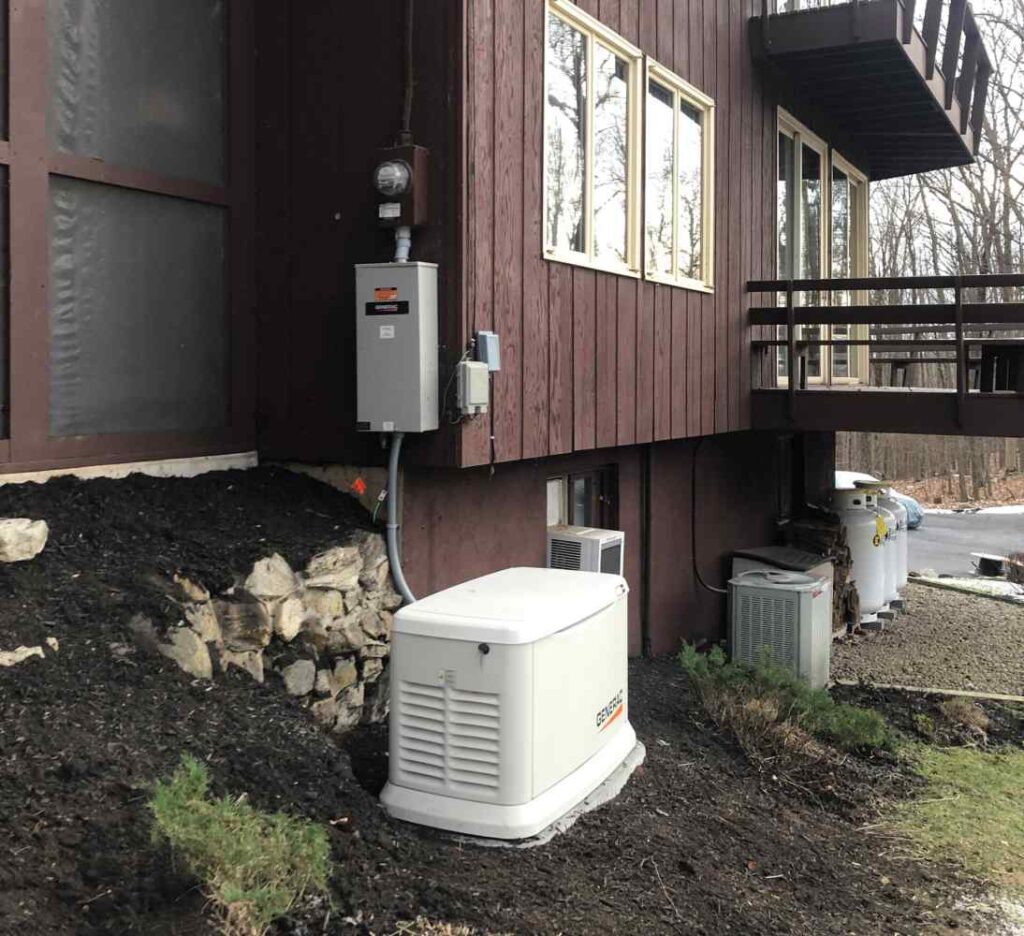
Different Generator Sizes
Generators come in various sizes, which are measured in kilowatts (kW). Here are the main categories available:
- Portable generators provide up to 10kW of power to handle a few appliances or tools, like your refrigerator, a window AC unit, and a handful of lights. However, they won’t cover your entire home.
- Mid-range standby generators provide 10kW to 25kW—enough power for heating systems, kitchen appliances, and well pumps. These units are permanently installed outside the house and usually connect to natural gas or propane.
- Whole-house standby models provide 25kW of power or more. They’re the best way to run a central air conditioner, electric water heater, and multiple large appliances simultaneously.
How to Determine the Right Generator Size
If you’re wondering what appliances a generator can power, it really comes down to wattage. Each device requires a certain amount, and your generator must meet both the running and startup loads.
For example, a refrigerator might use 600W while running but pull 2800W at startup. This spike in startup power draw applies to many high-wattage appliances, including furnaces, blow dryers, air conditioners, and garage door openers.
To help with generator sizing, walk around your home and look for the wattage listed on the side of everything you want to run—the sump pump, microwave, TV, and coffee maker, to name a few. It’s easy to see how quickly the number climbs.
With your power needs in mind, you can decide whether you want:
- Essential-only coverage to power heat, refrigeration, and lighting
- Partial-house coverage with a mid-sized generator and transfer switch that lets you select which circuits stay on
- Whole-house coverage provided by a large standby generator that can handle everything
Factors to Consider Beyond Size
While generator power capacity is a big focus, you have other things to consider before selecting a unit:
- Fuel type: Will you opt for natural gas, propane, diesel, or gasoline?
- Efficiency: Higher quality models run more smoothly and use less fuel.
- Noise level: Some generators operate more quietly than others, which might matter in your neighborhood.
- Grid connection: A generator tied to your home’s electrical panel and the power grid gives you seamless, automatic backup.
- Professional installation: Proper placement, ventilation, and wiring ensure safety and performance.
Ready for Reliable Power During Every Storm?
Knowing that a generator can power your whole house is a good place to start, but you need help from a qualified installer to perform a professional load calculation. This way, you’ll get enough power for your needs without paying for an oversized generator.
Seidel Electric Inc. would be happy to help. We can recommend the ideal generator sizing to meet your family’s power requirements during an outage. We also perform installations with your satisfaction guaranteed. For more information or to schedule services in the Tri-State Area, please contact us today.